Sep 21
admin
Fruit Mountain V1.2.1
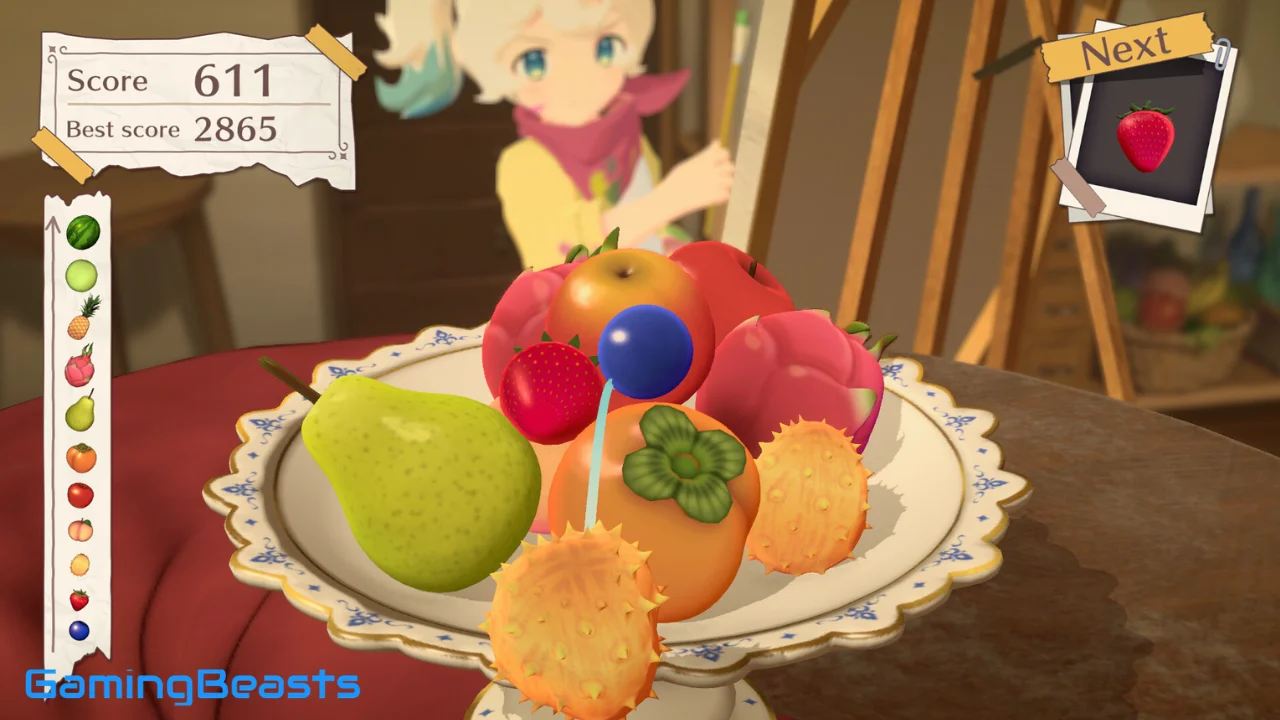
Fruit Mountain is a fruit-stacking puzzle game built around a simple idea: drop fruits, combine matching fruits, and create larger ones while keeping the stack under control. Its gameplay is closely related to the popular Japanese merging-puzzle formula, while the newer Fruit Mountain Party adds competitive multiplayer and several battle modes. The original Fruit Mountain is also available as a single-player experience, while Fruit Mountain Party supports local and online play for up to four players.
Because searches for Fruit Mountain often overlap with questions about mountain fruits, Flower Fruit Mountain, Fruit Ninja, and Japanese fruit-merging games, this guide answers the most common related questions in one place.
What Fruit Is Found in the Mountains?
The answer depends heavily on the mountain’s altitude, climate, and region. Mountains can support many different fruits because conditions change significantly as elevation increases.
For example, official information from Himachal Pradesh lists peach, plum, apricot, almond, pear, walnut, kiwi, and strawberry among fruits suitable for its mid-hill areas. Higher hills support apples, pears, cherries, almonds, walnuts, chestnuts, hazelnuts, and strawberries.
The Himalayan region is particularly famous for temperate fruits. Apples are among the most important crops, while peaches, plums, apricots, pears, and cherries are also cultivated in different elevations.
This is why fruit mountain can refer both to a video game and, more generally, to the diverse fruit-growing environments found in mountainous regions.
Is Flower Fruit Mountain a Real Place?
Flower Fruit Mountain, also called Mount Huaguo or Huaguo Shan, is primarily a legendary location from the Chinese classic Journey to the West.
In the story, it is the home of Sun Wukong, the Monkey King. The famous character is said to have been born from a magical stone on Flower Fruit Mountain and eventually becomes the leader of the monkeys living there.
However, there is a real-world mountain called Mount Huaguo in Lianyungang, Jiangsu, China, which is commonly associated with the legendary mountain. Scholars and historians have discussed several possible geographical inspirations, so it is more accurate to describe the real mountain as a location associated with the legend rather than simply saying it is the exact fictional mountain.
This connection is also why searches for Fruit Mountain, Flower Fruit Mountain, and the Monkey King can appear together.
What Is the Popular Fruit Game Called?
There are several popular fruit games, but two names are especially relevant to searches for Fruit Mountain.
Fruit Ninja is the famous fruit-slicing game from Halfbrick Studios. It launched in 2010 and became one of the major early smartphone gaming successes. Halfbrick reported that Fruit Ninja had reached one billion downloads by 2015.
Another major fruit game is Suika Game, a Japanese fruit-merging puzzle game. Instead of slicing fruit, players drop fruit into a container and combine identical fruits to create larger ones. The objective is eventually to create a watermelon without letting the fruit overflow.
Fruit Mountain belongs to the same broader family of relaxing fruit-stacking and merging puzzles. Its core idea is to place fruits on a plate and combine matching fruits to make progressively larger ones.
What Fruits Are Found in the Himalayas?
The Himalayas contain different fruit-growing environments depending on elevation and local climate.
Apple is particularly important in Himalayan horticulture. In Himachal Pradesh, government data identifies apple as the state’s most important fruit crop by production and growing area.
Different elevations favor different crops. Mid-hill areas can support peach, plum, apricot, pear, walnut, kiwi, and strawberry, while higher temperate areas are suitable for apples, pears, cherries, walnuts, almonds, and other cold-tolerant crops.
The Himalayas therefore don’t have one single “mountain fruit.” Instead, the fruit selection changes with altitude, temperature, rainfall, and soil.
What Are 10 Examples of Plants Found in Mountains?
Mountain ecosystems contain an enormous variety of plants because elevation creates multiple habitats. The U.S. National Park Service notes that mountain environments can include alpine areas, rocky slopes, wet meadows, plateaus, lakes, and streams, each supporting different plant communities.
The exact species vary from one mountain range to another. For example, the Indian government’s agricultural plant listings include deodar cedar and chir pine, both important trees associated with Himalayan environments.
At very high elevations, vegetation becomes shorter and more specialized because of cold temperatures, wind, limited growing seasons, and rocky terrain.
Can You Eat Mountain Apple?
Yes, mountain apple can refer to an edible fruit.
The name is commonly used for Syzygium malaccense, which is also called Malay apple, rose apple, Otaheite apple, and several other regional names. The ripe fruit is edible and can be eaten raw.
Despite its name, mountain apple isn’t the same species as the familiar temperate apple found in Himalayan orchards. It is a tropical tree native to parts of Asia and the Pacific and has a different appearance and flavor.
So if someone asks whether a mountain apple is edible, the answer is generally yes when referring to the properly identified ripe fruit.
Why Is Fruit Ninja So Popular?
Fruit Ninja became popular because it turned a very simple action—swiping across a screen—into an immediately understandable game mechanic.
The original game launched in April 2010. Within its first year, Halfbrick reported more than six million paid iPhone downloads, and the game later expanded to many other platforms.
Several features helped make it successful:
Simple Controls
Players can understand the basic concept almost immediately: swipe to slice fruit and avoid bombs.
Fast Gameplay
A round can be short, making Fruit Ninja suitable for quick gaming sessions.
Score Chasing
Players can repeatedly attempt to beat their previous score.
Combo System
Slicing multiple pieces of fruit in succession creates satisfying high-score opportunities.
Multiple Modes
The current Android version includes Classic, Arcade, and Zen-style gameplay, giving players different ways to play.
The formula also worked particularly well on touchscreen devices because swiping feels natural on a phone.
What Is the Highest Fruit in Fruit Merge?
In the standard Fruit Merge/Suika-style progression, the highest normal fruit is the watermelon.
A typical progression starts with small fruits and gradually combines them into larger ones. One commonly used sequence is:
Cherry → Strawberry → Grape → Dekopon → Orange → Apple → Pear → Peach → Pineapple → Melon → Watermelon
The important mechanic is that two identical fruits combine into the next fruit in the evolution chain.
The same basic objective appears in Suika Game: create the largest fruit, the watermelon, while preventing the container from overflowing.
This is also an important part of understanding Fruit Mountain strategy, because successful play isn’t simply about making the largest fruit immediately. Players need to control where fruits land and manage the available space.
How Do You Play the Japanese Fruit Game?
The Japanese fruit game most people mean is Suika Game, whose name comes from the Japanese word suika, meaning watermelon.The official game explains that players move the character Poppy left and right to determine where fruit falls. When matching fruits touch, they evolve into the next fruit type.
The challenge comes from physics and space management. A fruit may roll, bounce, or shift after another fruit lands, meaning players need to think about future combinations instead of only the immediate move.
This is one of the key similarities between Suika Game and Fruit Mountain.
What Anime Is Monkey King From?
The Monkey King, Sun Wukong, originally comes from the Chinese literary classic Journey to the West, rather than from a modern anime.
The character has subsequently appeared in many films, television series, anime-inspired productions, games, manga, and other forms of popular culture.
One important screen adaptation is the 1986 Chinese television series Journey to the West, which follows Sun Wukong’s story and includes Flower Fruit Mountain at the beginning of his journey.
Sun Wukong also influenced other fictional characters. For example, Son Goku from Dragon Ball takes his name and some elements of his character concept from the Monkey King tradition, although Dragon Ball develops Goku into its own separate character and universe.
Therefore, if you’re searching for the original story behind the Monkey King, Journey to the West is the key source.
Fruit Mountain Tips and Strategy
If you’re specifically looking for Fruit Mountain tips, the biggest lesson is to think about the entire stack rather than chasing every possible merge.
Try to keep your fruits organized so that matching pieces can eventually meet. Randomly dropping every fruit into the center can create unstable piles and make later moves harder.
A few useful principles are:
- Plan your drops before releasing the fruit.
- Keep larger fruits stable.
- Avoid creating unnecessary gaps.
- Use the edges carefully.
- Think about the next two or three merges.
- Don’t build too high too quickly.
- Keep space available for unexpected fruit movement.
The newer Fruit Mountain Party expands this formula into competitive play. It supports local multiplayer for up to four players, online room-based matches, Steam Remote Play Together, and several modes including Standard Race, Thief Frenzy, Fruit of the Sun, Great Harvest, and Survival. It also includes single-player play against NPCs with three difficulty settings.
Its Time Attack mode specifically challenges players to create a watermelon as quickly as possible, making speed and efficient fruit placement important parts of the strategy.
Fruit Mountain vs Fruit Mountain Party
The names are similar, but the games have different focuses.
Fruit Mountain is the original 3D fruit-stacking puzzle experience. Its core gameplay centers on combining fruits and managing your stack.
Fruit Mountain Party takes that concept into competitive territory. It was released from Early Access into version 1.0 in April 2026 and adds battle-focused modes, items, online competition, local multiplayer, and single-player matches against computer-controlled opponents.
That makes the two games useful for different types of players. Someone looking for a straightforward fruit puzzle can focus on the original, while players who want competitive matches can explore Fruit Mountain Party.
Final Thoughts on Fruit Mountain
Fruit Mountain sits within a popular category of simple but surprisingly strategic fruit puzzle games. Its appeal comes from the easy-to-understand concept of stacking and merging fruits, while careful positioning creates the deeper challenge.
The related searches also reveal why the keyword can be confusing. Fruit Mountain can lead to questions about real mountain fruits, Himalayan agriculture, Flower Fruit Mountain from Journey to the West, Fruit Ninja, and the Japanese Suika Game.
For the game itself, the most important strategy is space management: control where fruits land, prepare future combinations, and avoid allowing your stack to become unstable. If you want a multiplayer version, Fruit Mountain Party builds on the same basic concept with competitive modes and up to four-player battles.