Sep 25
admin
Astrea: Six-Sided Oracles v1.3.59-TENOKE
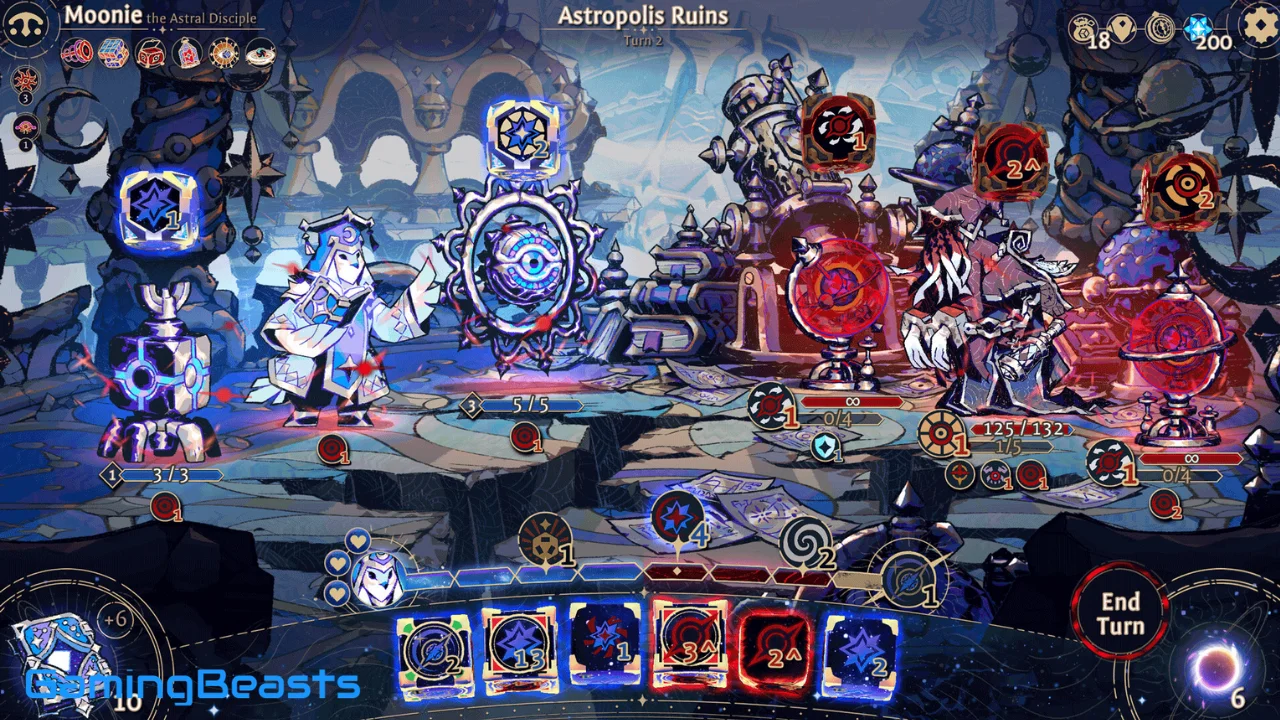
Astrea: Six-Sided Oracles is a dice-based roguelike deckbuilder from Little Leo Games and Akupara Games. Instead of building a traditional card deck, you create a pool of dice and use the game’s unusual Purification and Corruption systems to control battles. It released on PC in September 2023 and later arrived on Nintendo Switch, PlayStation and Xbox platforms.
The game has attracted attention from players looking for a deeper alternative to traditional deckbuilders. Current tracking data lists around 12 hours for the main story, about 22 hours for main content plus extras, and roughly 50 hours for completionist play, although individual runs are much shorter.
Below are answers to the most common Astrea: Six-Sided Oracles questions, including playtime, reviews, characters, Steam, iOS, Nintendo Switch, and comparisons with other games mentioned in search results.
How Long Does It Take to Beat Astrea: Six-Sided Oracles?
A typical Astrea: Six-Sided Oracles main-story playthrough takes around 12 hours. Current HowLongToBeat data reported through GOG and other game databases puts the main story at approximately 12 hours. A main-plus-extras playthrough is around 21–22 hours, while a completionist run can reach approximately 49–50 hours.
However, Astrea works differently from a traditional linear RPG. Your individual runs are much shorter, and you are expected to replay the game using different characters, dice combinations, strategies and difficulty levels.
A Steam community discussion about the game’s content reported that an individual successful run could take around 1 to 1.5 hours without rushing.
Because Astrea is a roguelike, you can continue playing long after completing your first successful run.
Is Astrea: Six-Sided Oracles Worth It?
Whether Astrea: Six-Sided Oracles is worth playing depends largely on what you want from a roguelike deckbuilder.
The game’s main attraction is its dice system. Instead of selecting cards during combat, you manage dice with different effects and probabilities. The Purification vs. Corruption mechanic also changes how health, damage and abilities work. Purification can damage enemies or restore your own condition, while Corruption introduces risk but can enable powerful effects.
For players who enjoy games such as Slay the Spire, Monster Train or other strategic roguelikes, Astrea offers a different approach to the familiar formula.
Its reception has also been generally positive. Metacritic lists an 85 critic score for the PC version, based on six critic reviews, with the reviews categorized as generally favorable.
Steam tracking currently shows around 92% positive reviews from roughly 3,000 reviews, while GOG lists the same game with its dice-based roguelike and deckbuilding features.
That does not mean every player will enjoy it. The mechanics can initially feel complicated because the game introduces several terms, dice effects and the Purification/Corruption system. Some player reviews specifically mention a learning curve before the systems become easier to understand.
Astrea: Six-Sided Oracles Characters
Characters are an important part of Astrea because each playable character can encourage a different approach to dice building and combat.
Rather than simply selecting a character for cosmetic differences, players need to consider how a character’s abilities interact with their dice pool, health mechanics and Purification or Corruption effects.
This is one reason the game’s replay value is considerably higher than its basic 12-hour main-story estimate. A player who finishes one successful run has not necessarily experienced everything Astrea offers.
The character system also encourages experimentation. You can try different dice combinations and build strategies around individual character strengths rather than following one fixed deck throughout the game.
Astrea: Six-Sided Oracles Gameplay
The central gameplay loop combines roguelike progression, dice building and turn-based combat.
During a run, you encounter enemies and events, develop your dice pool and make decisions about which effects to use. Instead of relying entirely on random card draws, you work with dice and their possible outcomes.
The most distinctive mechanic is the game’s dual system:
Purification can be used offensively against enemies or defensively to restore yourself.
Corruption works in the opposite direction and can create dangerous situations, but it can also unlock stronger effects and strategic opportunities.
This creates a risk-and-reward structure. You are not simply trying to eliminate every negative effect. Sometimes accepting risk can create a stronger build.
That makes each run partly about managing probability and partly about understanding when to take a calculated risk.
Astrea: Six-Sided Oracles Steam
Astrea: Six-Sided Oracles launched on Steam on September 21, 2023. The PC version was developed by Little Leo Games and published by Akupara Games.
The Steam version includes the core roguelike experience and supports the game’s dice-building mechanics, achievements and replayable runs.
Steam is also where much of the game’s community discussion takes place. Players have discussed run length, content variety, character strategies and other gameplay questions in the game’s community forums.
For PC players looking for a dice-based alternative to card-focused roguelikes, Steam remains one of the main platforms for Astrea.
Astrea: Six-Sided Oracles Metacritic
The PC version currently has an 85 Metascore on Metacritic, based on six critic reviews. Metacritic classifies that result as Generally Favorable.
The individual reviews highlight different aspects of the game. Some praise its dice-based approach and tactical depth, while others point to the learning curve and traditional roguelite structure.
The Nintendo Switch version also has an 85 Metacritic score listed by GameFAQs, based on six critics. One of the cited reviews described the dice system as a refreshing change from traditional deckbuilders.
Therefore, the available critic reception suggests that the game’s main innovation is its replacement of conventional cards with dice and its Purification/Corruption mechanics.
Is Astrea: Six-Sided Oracles on iOS?
Yes. Astrea: Six-Sided Oracles is available on iOS, making it possible to play the dice roguelike on compatible iPhone devices. The App Store listing shows the game and includes player reviews discussing the mobile version.
Some App Store reviewers specifically mention playing the game on PC and then purchasing the iOS version for portable play.
One player described individual runs as approximately 30 minutes to one hour, which fits the game’s roguelike structure rather than its much longer overall completion estimate.
Mobile players should also keep in mind that the experience can involve a learning period because of the number of mechanics and terms used by the game.
Astrea: Six-Sided Oracles Switch Review
The Nintendo Switch version released on September 26, 2024, and the game is available for handheld and TV play.
The Switch version has received positive critical coverage, with GameFAQs listing an 85 Metacritic score based on six critics.
The handheld format also fits Astrea’s run-based design. Because individual runs can be completed in a relatively short session, the game can work well for players who prefer playing in smaller chunks rather than committing to a long RPG session.
The main consideration is that the game’s mechanics can take some time to understand, particularly for players who have never played a dice-based roguelike before.
How Long Does It Take to Complete Oracle of Seasons?
The Legend of Zelda: Oracle of Seasons is a completely different game from Astrea: Six-Sided Oracles.
If this PAA question refers to Nintendo’s The Legend of Zelda: Oracle of Seasons, the main story generally takes around 15 hours. Current game-time databases list approximately 14–15 hours for the main story, around 18 hours for the main story plus extras, and about 21–22 hours for 100% completion.
Oracle of Seasons was originally released for the Game Boy Color in 2001 and was developed by Capcom Production Studio 1.
The game is an action-adventure title rather than a roguelike. Its central mechanic involves changing seasons to alter the environment and solve puzzles.
So, although both titles contain “Oracle” in their names, Astrea: Six-Sided Oracles and The Legend of Zelda: Oracle of Seasons are unrelated games.
How Long Does It Take to Beat Astria Ascending?
Astria Ascending is another completely separate game and should not be confused with Astrea: Six-Sided Oracles.
It is a turn-based RPG developed by Artisan Studios and features eight playable characters, more than 20 dungeons, multiple cities and more than 200 monsters.
That makes Astria Ascending considerably longer than a typical main-story playthrough of Astrea: Six-Sided Oracles.
Astria Ascending is designed more like a traditional story-driven JRPG, while Astrea is built around repeated roguelike runs, dice builds and strategic experimentation.
Astrea: Six-Sided Oracles – Final Summary
Astrea: Six-Sided Oracles is a dice-based roguelike deckbuilder with a distinctive Purification and Corruption system. Its main story takes roughly 12 hours, while players looking for extras and completionist content can spend approximately 22 to 50 hours with the game.
It is available on PC, Nintendo Switch, PlayStation, Xbox and iOS, giving players several ways to experience its turn-based dice combat.
For SEO searches such as Astrea Six Sided Oracles review, characters, guide, gameplay, Steam, Metacritic, iOS and Switch review, the key point is that the game focuses on replayable dice-based strategy rather than a long linear campaign. Its positive critic and player reception, combined with its replayable structure, has helped it stand out among modern roguelike deckbuilders.